
23rd World Congress of Soil Science 2026: Connecting Science to Policy in Nanjing
Earlier this month, the global soil science community converged on the Nanjing International Expo Centre for the 23rd World Congress of Soil Science (WCSS). Hailed as the “Olympics of Soil Science”, this marks the first time in the event’s nearly 100-year history that it was hosted in China.
Running from June 7 to 12 under the timely theme “Soil and the Shared Future for Humanity”, the congress brought together nearly 3,000 experts, scholars, and policymakers from over 100 countries to tackle critical global challenges like food security, climate change mitigation, and ecosystem resilience.
For our research delegation from the University of Sydney, the congress was a brilliant window into the future of our discipline and a fantastic platform to showcase how Australian research is bridging the gap between complex science and real-world policy.
Key Takeaways from the Congress Floor
With 9 major symposia and more than 100 parallel sessions, the scientific program was expansive. A few overarching trends stood out that align heavily with our ongoing work back home:
- Our Session on Soil Security and Policy: Foundations for a Sustainable Future: With 12 engaging presentations during this session and a panel discussion, the session was highly engaging and created a successful achievement for both Aroura (Global Soil Security Think Tank) and the soil security concept. The talks comprised of both soil securing policies and spatial quantification methodologies which provided a promising narrative of soil security.
- Mechanistic vs. Statistical Modelling: There was a palpable shift in discussions surrounding digital soil mapping and climate interactions. While machine learning continues to be a powerful tool, a growing chorus of scientists emphasised the need to ground spatial predictions in mechanistic, physics-based frameworks to truly understand soil processes.
- Soil-Climate Interactions: Understanding how soil acts as a climate mitigator and carbon sink dominated the climate-focused symposia. Speakers highlighted that studying soil as a global existential issue is no longer just an academic exercise, it is foundational effort required for regional climate adaptation frameworks.
- The Nanjing Action Initiative: A major milestone of the week was the development of the Nanjing Action Initiative, a collaborative roadmap designed to guide international soil science research, data sharing, and policy cooperation over the next decade.
A Spotlight on Exhibition Booth “Aroura”
Beyond the lecture halls, the exhibition centre was buzzing with activity, and our team was right in the thick of it. The University of Sydney delegation hosted an interactive booth for Aroura, which quickly became a vibrant hub for engagement.
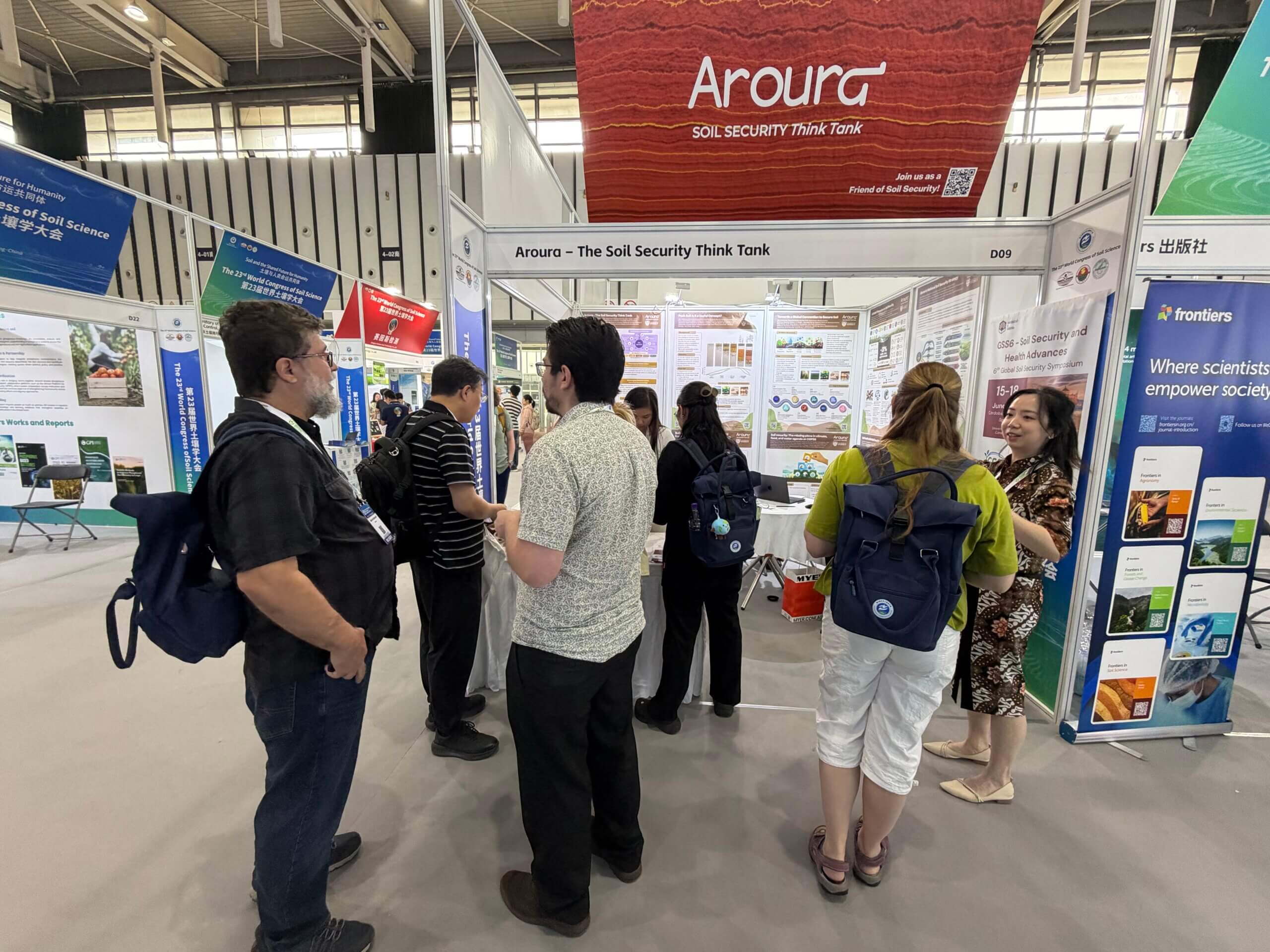
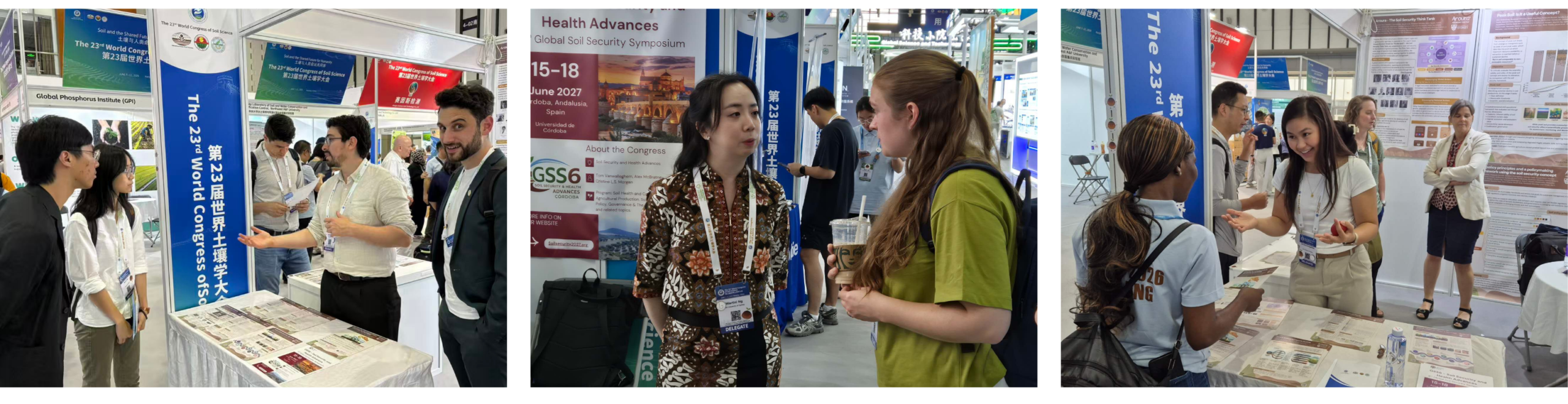
Aroura booth at the World Congress of Soil Science, 2026, Exhibition hall, Nanjing, China. Photographs from Alex McBratney and Budiman Minansy
Designed to translate dense spatial data into accessible insights, the Aroura booth attracted significant attention from international researchers and policymakers alike. We showcased our ideas and discussion papers on soil security policy. Visitors were particularly drawn to our interactive visual displays, which demonstrated how soil securing ideas from our think tank can be rendered into intuitive tools for soil and environmental management.
The booth sparked excellent discussions around translating technical soil metrics into the plain language needed for national soil security and environmental strategy. It was a proud moment for our group, opening doors for several promising international collaborations.
Conclusion: Looking ahead
Returning to Sydney, our team is energised by the ideas exchanged in Nanjing. The congress reinforced that our focus on soil security assessment framework and proactive policy translation is exactly where the global discipline is heading. As we digest the insights from WCSS 2026, we look forward to integrating these global perspectives into our upcoming research and ongoing national mapping projects.
Thank you to everyone who supported our delegation and stopped by Booth Aroura.
Here’s to shaping a sustainable, soil-secure future!
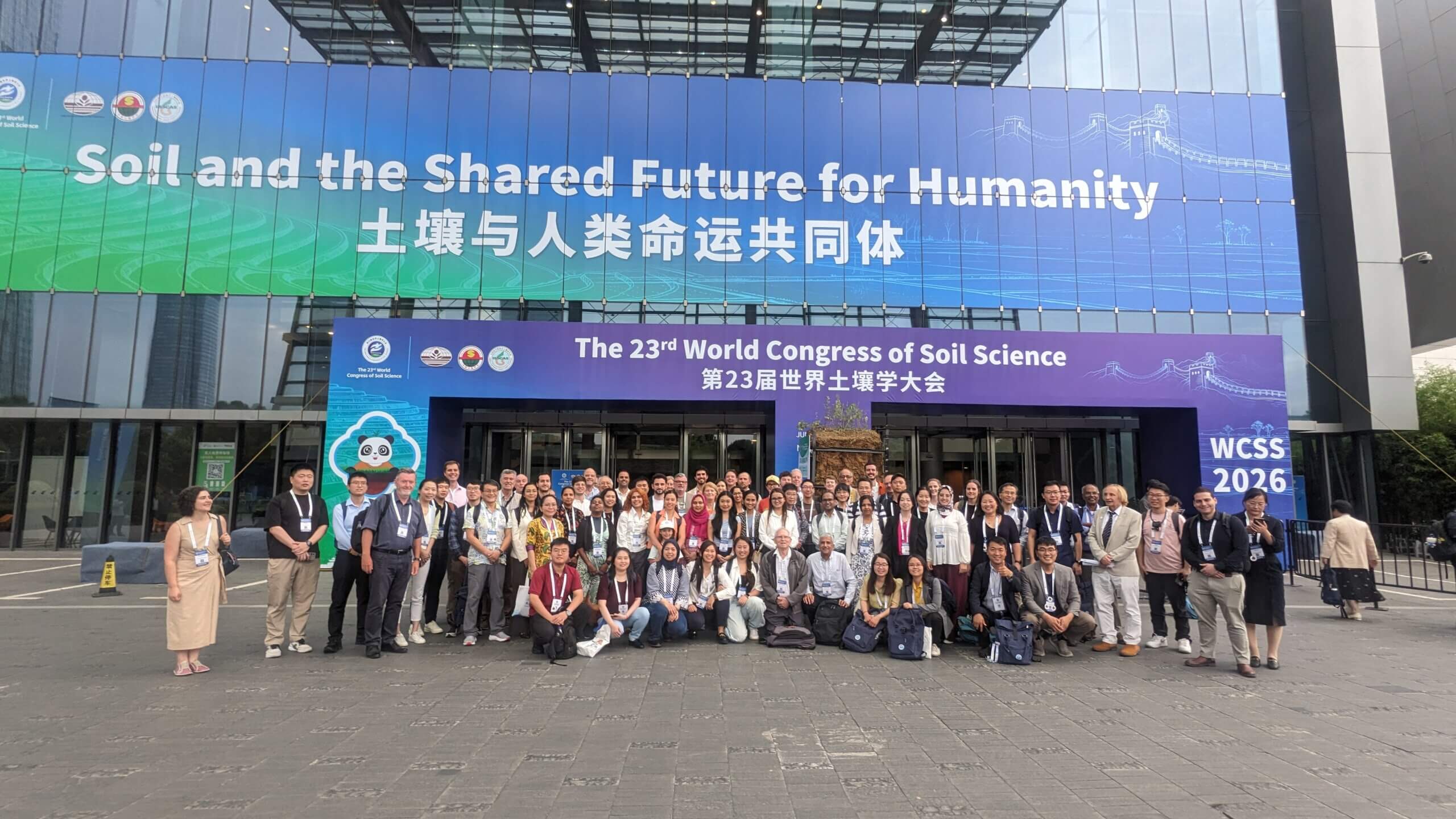
Australian delegates at the 23rd WCSS in Nanjing, China. Image provided by Vanessa Wong
by Amin Sharififar
Postdoctoral Research Associate at the University of Sydney
Amin holds a PhD, Master’s, and Bachelor’s degrees in agricultural and environmental soil science, with expertise in spatial science. He has over four years of postdoctoral research experience in pedology and environmental soil science across Iran, Scotland, and Australia. His research focuses on developing quantified and systematic approaches for soil monitoring and assessment. Currently, he is a research associate at the University of Sydney, working on quantifying soil security dimensions, particularly soil condition and capacity. Amin is passionate about soil–climate interactions and exploring how soil and landscape management strategies can adapt to climate change and support sustainable, smart utilisation systems.