
From Mud Cloth to Mud-Dyed Kimono: Two Soil Stories, Two Continents
If you lay a Malian bògòlanfini cloth next to an Amami Ōshima Oshima tsumugi kimono, they look like they come from different worlds. One is hand-spun cotton with bold, geometric symbols in ochres and blacks. The other is a precise silk ikat in deep, almost metallic browns and charcoals.
But both are, quite literally, soil you can wear. And both depend on landscapes whose soils and waters are under pressure.
For Aroura, these textiles are not just beautiful objects; they are case studies in soil security. They show how the condition, capacity and connectivity of soil shape culture, identity and livelihoods across continents.
Mali’s bògòlanfini: stories written in mud
In Mali, bògòlanfini, often called bogolan or mud cloth, begins with narrow strips of hand-woven cotton, stitched together into a wider cloth. The fabric is first soaked in a dye bath made from the leaves of local trees such as n’gallama, loading the fibres with tannins and turning them a warm golden yellow.
Then comes the soil. Artisans collect mud from particular riverbeds and floodplains, rich in iron and organic matter, and leave it to ferment in clay jars. Using simple tools or even their fingers, they paint designs onto the cloth. As mud meets tannin, the motifs slowly darken into browns and blacks that are fixed into the fabric over multiple cycles of painting, drying and rinsing.
Mud cloth is a language as much as a textile.
Motifs reference historical battles and political moments, crocodiles and other figures from Bamana cosmology, and a dense library of proverbs about protection, fertility, danger and status. Colours and layouts are tied to life stages and rituals, whether hunters’ wraps that combine camouflage with spiritual protection, cloths used in initiation or childbirth, or patterns associated with marriage and mourning. In the late twentieth century, bògòlanfini was reclaimed as a symbol of Malian identity and is now seen in global fashion, galleries and interiors.
Behind every piece of cloth lies a very specific soil recipe. Iron-rich river clays provide the reactive muds. Tannin-bearing trees supply the first dye bath.
Clean water allows soaking, rinsing and fermentation. Reliable sun and wind are needed at each drying stage.
This recipe is really a microcosm of soil security. It depends on the capacity of Sahelian soils and floodplains to keep supplying iron-rich sediments, the condition of local vegetation that provides dye plants, and the connectivity between river, forest and village.
As the Sahel faces land degradation, deforestation, overgrazing and climate stress, each part of that recipe is under pressure. Eroded riverbanks, polluted water or the loss of key tree species do not just threaten yields of millet or sorghum. They also threaten the ability of Malian communities to keep writing in mud, to keep telling stories in their own visual language.
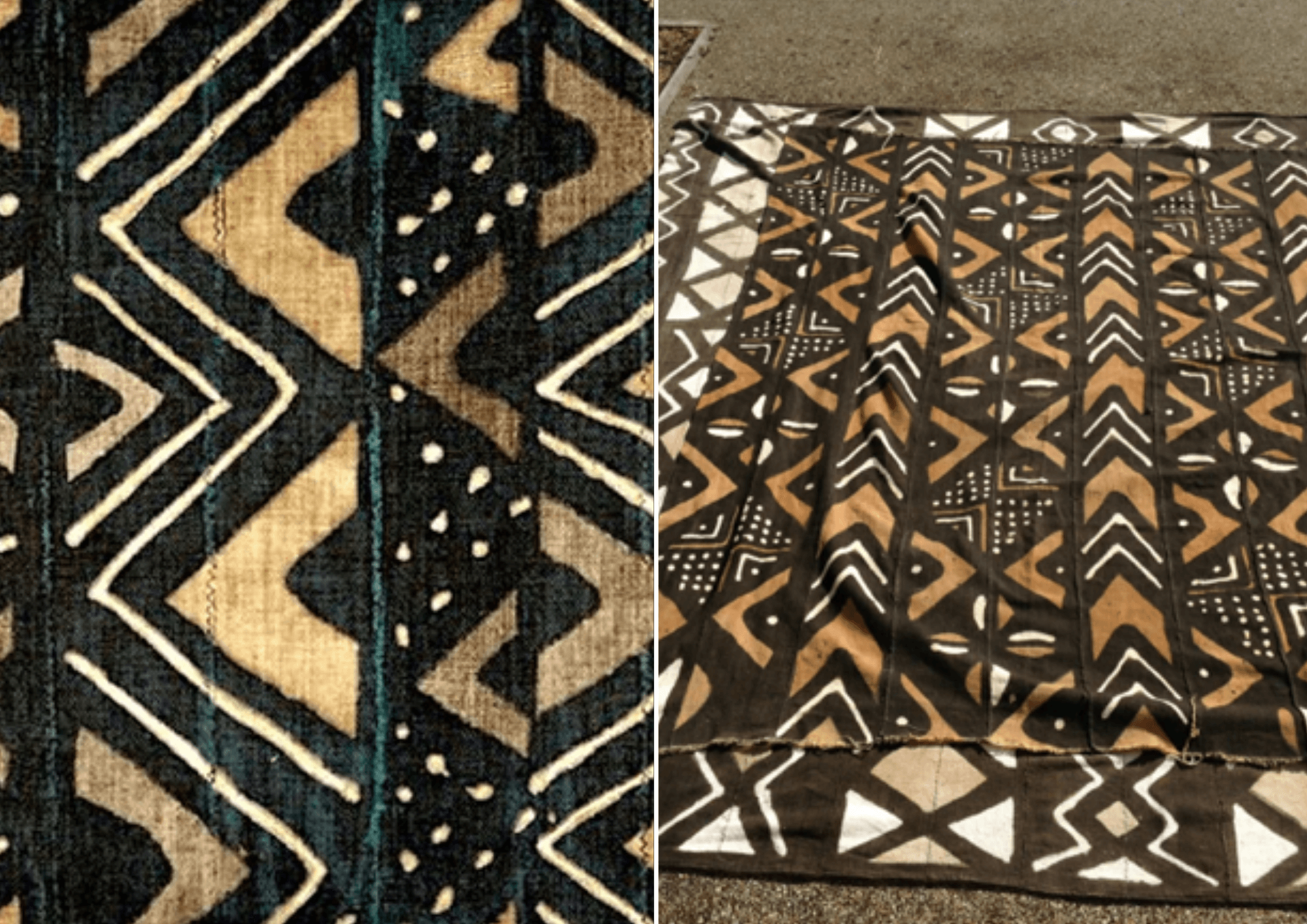
Some bògòlanfini artworks from www.contemporary-african-art.com and www.etsy.com)
Amami Ōshima’s dorozome: silk darkened by paddy mud
On Japan’s Amami Islands, a subtropical archipelago between Kyushu and Okinawa, another soil-centred craft has evolved: Honba dorozome, or authentic mud dyeing, the foundation of Oshima tsumugi silk.
Here, craftspeople begin by boiling the wood of the sharinbai, or techigi, tree to create a tannin-rich dye liquor. Silk yarns are repeatedly dipped and dried in this solution, slowly absorbing layer upon layer of plant tannins. Then those yarns are taken into carefully managed paddy fields and worked through the mud. The soils are rich in iron; as the silk is kneaded through the slurry, iron reacts with the tannins, deepening the colour from soft brown to the deep black-brown associated with Oshima textiles. Once dyed, the yarns are used in an intricate ikat process in which patterns are pre-tied on the threads before weaving. A single kimono’s worth of cloth can take many months to complete.
Again, soil and water are not background; they are central actors.
Paddy soils double as dye vats, and their iron content and structure must be carefully maintained. Forested hillsides supply sharinbai wood and stabilise slopes. Clean, flowing water through the island catchment supports both agriculture and dyeing. Fields must be managed so they remain productive for rice and suitable for mud dyeing, tying food production and cultural practice tightly together.
Climate change is reshaping these island systems. Heavier rains and more intense typhoons increase the risk of landslides and erosion, damaging paddy soils and infrastructure. Changes in hydrology can disrupt both rice growing and mud dyeing. If forests are degraded, the supply of sharinbai wood is compromised. From a soil security perspective, dorozome depends on the condition of paddy soils, the connectivity between forests, slopes, fields and waterways, and the care embedded in policies, traditions and community practice that protect this coupled agro-cultural system.
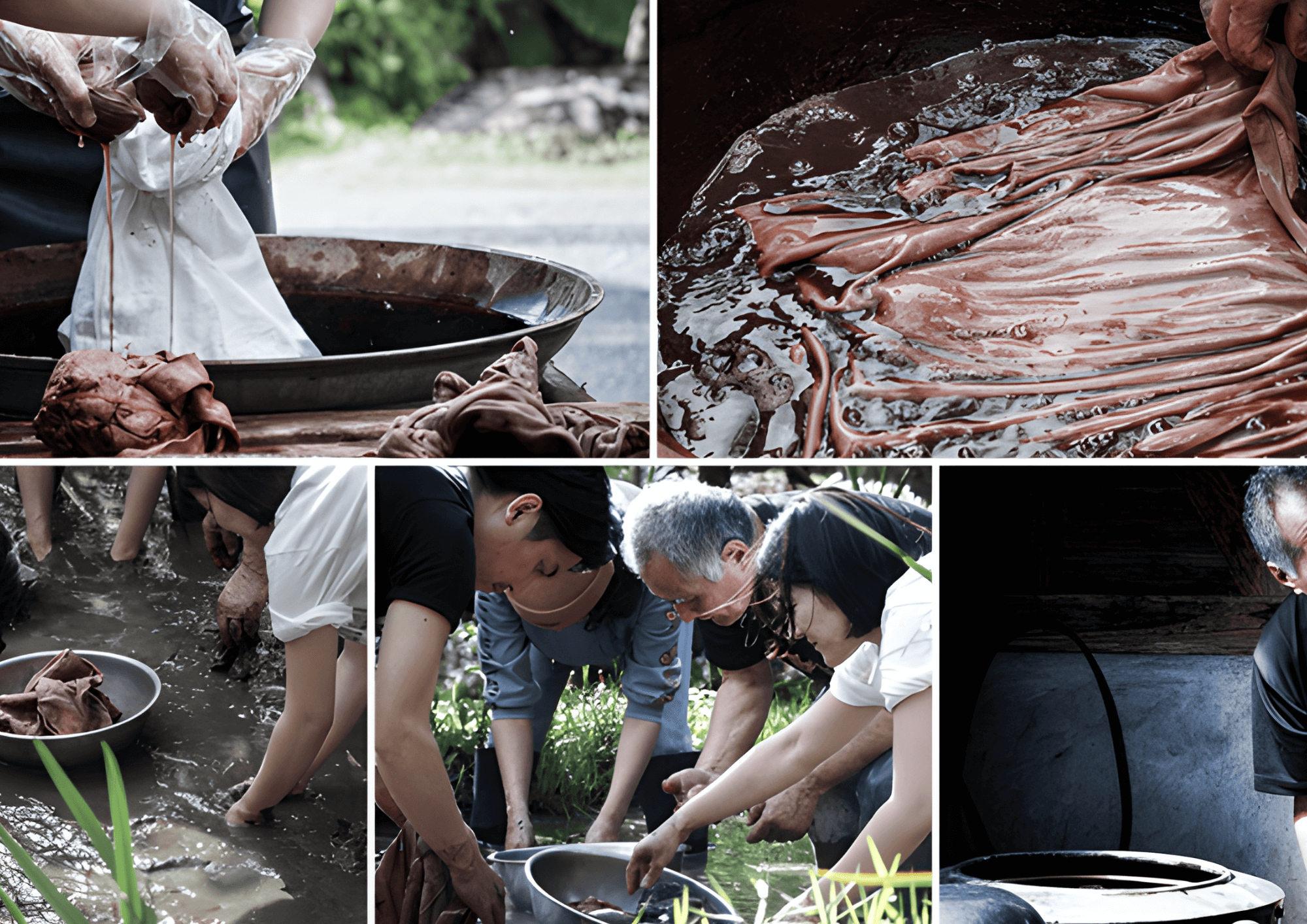
Artisans performing the Amami dorozome (mirucollection.com)
Soil security as cultural security
Seen together, bògòlanfini and dorozome show that soil security is not only about calories, commodities and carbon.
It is also about continuity, creativity and cultural pride. When communities can keep weaving their own stories into cloth with local muds, plants and skills, soil is transformed from a resource into a collaborator.
It becomes a medium of memory, carrying histories, cosmologies and proverbs. It becomes a vehicle for identity, visible in what people wear for ceremonies, work and celebration. It becomes a source of livelihoods, from artisans and farmers to traders and designers.
Conversely, when soils are degraded, polluted or cut off from traditional access, the impacts ripple far beyond yields or erosion metrics. Craft knowledge may be lost if younger generations cannot practise with the right clays or plants. Rituals tied to particular colours or motifs may weaken. Communities may become cultural tenants in their own landscapes, wearing imported patterns while their own soil stories fall silent.
For a soil security lens, this means expanding our field of view beyond the farm gate, to consider crafts, ceremonies, tourism and creative industries as part of what secure soils support. It means looking beyond short-term projects and recognising that cultural practices often encode long-term stewardship of landscapes, and that losing them can accelerate degradation. It means moving beyond one-dimensional metrics, and appreciating that a secure soil is one that sustains biophysical functions and the stories, skills and meanings that grow from it.
Conclusion: Wearing our soil futures
From Malian river mud to Amami paddy soils, these two dye traditions remind us that soil security is not an abstract target. It is something you can see, touch and even wear. When we talk about protecting catchments, stabilising slopes or restoring vegetation, we are also talking about whether future generations in Bamako and Amami will still be able to learn to read a motif, test a mud by hand, recognise the smell of a dye bath, and wear their soil on their skin with confidence rather than anxiety.
For Aroura, the lesson is clear. Investing in healthy rivers and floodplains in the Sahel is an investment in Malian cultural sovereignty as much as food security. Protecting forests, paddies and catchments on Amami is a way of safeguarding both rice production and a globally unique textile tradition. Soil security, in other words, is also cultural security. If we design policies, finance and research that recognise this, supporting the landscapes that give rise to crafts like bògòlanfini and dorozome, we do more than conserve ecosystem services. We protect living relationships between people and place.
In a warming, uncertain world, the question is not just whether soils can keep feeding us, but whether they can keep clothing us in our own stories.

by Daniel Park
Administrative Officer
Daniel (Minhyung) Park works with the Soil Security group in the School of Life and Environmental Sciences at the University of Sydney, where he helps coordinate research, events and funding around soil security. He is currently studying a combined Bachelor of Commerce and Laws, with interests that span environmental law, finance and governance. Daniel is closely involved in developing Aroura, a soil security think tank focused on bringing soil onto the global agenda, and collaborates with researchers, students and partners across disciplines. Alongside his university roles, he has experience in consulting, and education, and has taught a wide range of students over several years.
Related Articles
When Soil Became Bread – The Korean War, Geophagy, and Soil Security
“Man shall not live on bread alone.” But what happens when even bread disappears? In June 1950, the Korean War tore through the land. Cities fell silent under bombardment. Villages emptied as families fled into the mountains, leaving behind homes, fields, and food....