
Exploring a Soils Story – Sydney Olympic Park
Everyone has a place that is able to evoke emotions unlike any other. That place of intrigue and nostalgia, passion and calm, all rolled into one truly unique location. For me, that place might just be Sydney Olympic Park. Situated 13 km west of Sydney, it is a reminder of many positive personal experiences. Aside from being the site of the 2000 Sydney Olympics, it has been the site for various sporting and cultural events, festivals and music. Overall, the suburb has been able to transition well following the Olympic Games and continues to be a great hub of activity in the inner-city regions of Sydney. However, the paved roads, athletic fields and infrastructure weren’t always there.
Deep below the surface, the soil tells a story about the history of the place that holds memories for many Sydneysiders.
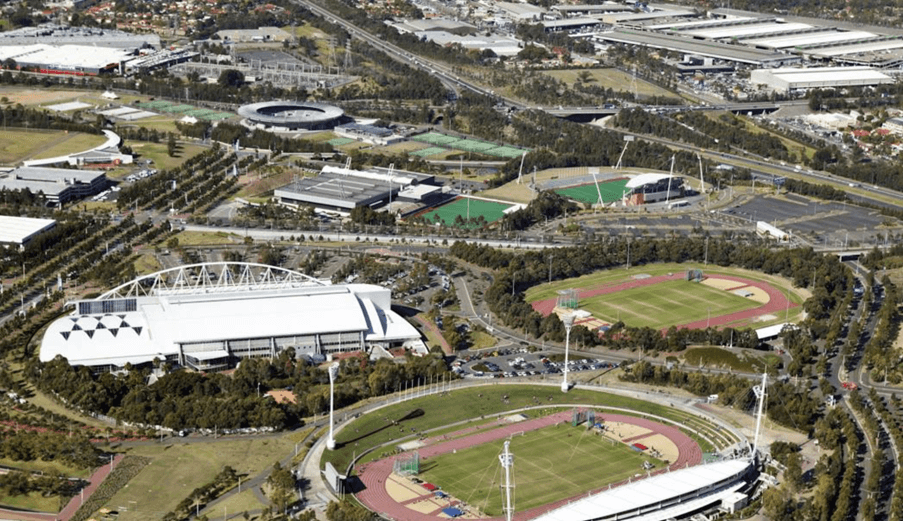
Olympic Park, historically known as Homebush Bay, is situated along the southern shore of the Parramatta River, which connects Sydney Harbour all the way out to Parramatta in western Sydney. As such, it historically consisted of wetlands, salt marshes and mangroves. As a result, soils along the coastline were highly saline, though inland soil variability facilitated a great level of diverse native vegetation.
For the original custodians of the land, this site served as a key landmark along the river and a thriving ecosystem to provide valuable resources. Following colonisation, Homebush has seen a series of uses during the 19th century, including salt pans, a flour mill, navy depot and horse racing track. Additional and more prevalent uses in the 20th century included an abattoir and state brickworks. However, by the 1950s, growing urbanisation led to large allocations of land for landfill, pushing the ecosystem to the brink at various locations.
It would take a remediation effort at a level previously unseen in Australia to propel Homebush to its role in hosting the 2000 Sydney Olympic Games. There have since been further developments to various stadiums, further urban infrastructure, some industrial developments and other changes to provide ample green space for the area. Further, several of the wetlands and mangroves have been restored and integrated into the surrounding urban areas as the backdrop of a walking track that connects western Sydney all the way into Sydney Harbour.
Linking this back to soil, we can see how the evidence of some of this history is reflected in the soil, particularly regarding changes in the shoreline and wetland drainage. Accumulations of decaying organic matter deep within the profiles detail the native history of the soils, and the critical role soil plays in cycling carbon in these environments.
Anthropogenic influences can be seen in changes in salinity due to the salt pans and deposited remnants of mill waste products and buried landfill. Naturally, the brick pit is a direct consequence of the soil, derived from a Triassic shale known as Ashfield shale. In this way, soil can act as a record of history, both natural and anthropogenic.
This leads naturally into the concept of pedology, which looks into the role of soil formation and evolutionary pathways that have combined to produce the soil we see today. This then in turn relates to the soil security concept of pedogenons, which looks to classify soils based on different formation factors to identify similar soils on a range of scales. This allows you to identify unique soils, parent materials and formation processes, of which the Ashfield shale outcrop is a good example.
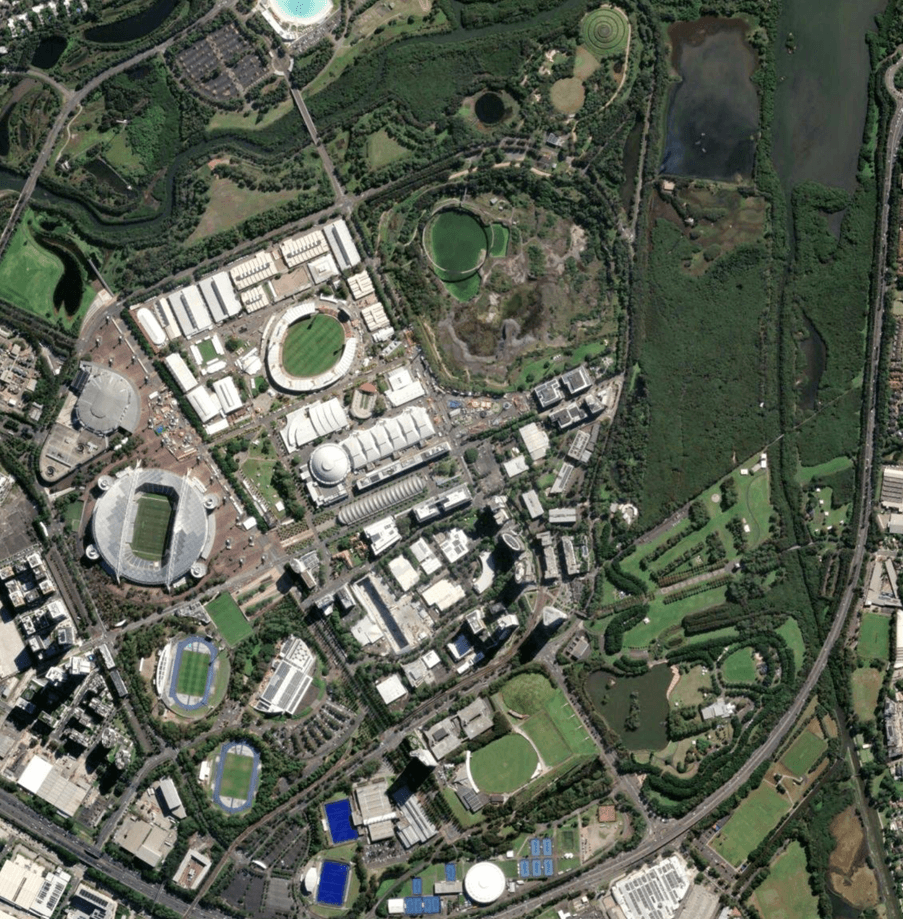
However, the ability of soil to tell this story is hampered by the prevalent sealing of soil in the area, particularly around the stadiums. Large concrete paths cover the soil, hindering soil biological activity and biodiversity, weakening soil structure through compaction and causing soils to dry out due to limited infiltration.
While there are plenty of surrounding trees and the soil is covered with bark to prevent erosion, this leaves a stark contrast between these areas and the native vegetation. This contrast is even more apparent in the turf of the various stadiums, which are always maintained in immaculate condition. Even the parklands seem somewhat disconnected from the wetlands that once dominated the ecosystem.
This sometimes leaves the space feeling somewhat cold, particularly on quiet days with no crowds, though in summer, cold is not the best way to describe the heavily concreted areas.
Despite my general critique of some of the management, the utilisation of Sydney Olympic Park makes this one of the major highlights of the inner-city region. While much of the history as told through the soil is being lost through sealing, this illustrates a new challenge for the region and a component captured by the remaining soil. There is generally a good balance between green space and infrastructure to ease the pressure of soil sealing in the area.
Conclusion: Reflecting on soil stories around you
I would encourage readers to similarly look to places important to them and reflect on the history of the site and how it is currently being managed. Then consider that much of this story can be told by looking through the soils of the landscape, so long as surface sealing and anthropogenic soil transportation do not interrupt this narrative.
Even with minimal access to any scientific resources or concepts, developing this mindset can facilitate deeper thoughts about the history of the soil, its current management and the potential for this to be gradually lost by human activity. Being able to do so is a basic way to allow people to better understand their own soils and the unique potential of soil that is not often considered to facilitate long-term soil connectivity.

by Daniel Irving
PhD Candidate
Daniel completed his Bachelor of Science degree at the University of Sydney majoring in Agriculture and Soil Science in 2024. Since then, he has been working towards a PhD looking into the role of soil in shaping quality parameters of a range of different agricultural products, including wheat, wine and cotton. He has separately worked on a range of projects primarily covering soil security, spectroscopy, microbiology and soil carbon.
Related Articles
Soil Security and the 4 per 1000 initiative: Making Climate Gains Last
Last November marked a major milestone for the International “4 per 1000” Initiative, which celebrated ten years of promoting soil carbon as a tool for climate action, food security, and sustainable development. This is because soil carbon is arguably one of the key...
Soil and the Cities: soil’s significance in every day’s life
Soil: The Unsung Hero of Human Survival Soil is everywhere beneath our feet, but most of us rarely give it a second thought. Yet, this humble dirt is the silent foundation of life on Earth. It grows our food, filters our water, and even plays a major role in keeping...
The Hidden Beauty of Soil’s Secret Star Power
So you’ve clicked on a blog post about soil. Why exactly did you do that? What inspired you, connected with you, drew you in to wanting to read about soil of all things? While I think my friends are used to me talking about it by now, soil is rarely thought of as the...