
Blog
News & Updates
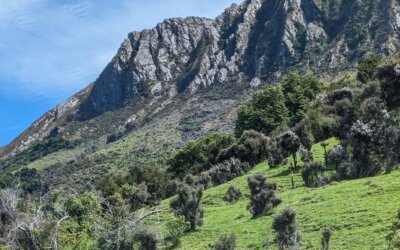
From Soil Health to Soil Security: Seeing the Bigger Picture
One of the recurring difficulties in talking about soil is explaining the difference between soil health and Soil Security. The two ideas are closely related, but they are not interchangeable. Soil health – or, perhaps more precisely, soil condition – describes the...
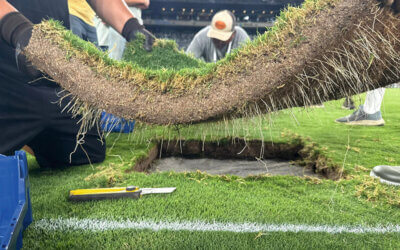
From the FIFA World Cup Pitch to the Planet: What Football Can Teach Us About Soil Security
Image from Blair Ferguson, PITCHARE (Link: From research to reality: FIFA’s shallow pitch system debuts at the Cl | Pitchcare) Over the past month, millions of us have enjoyed the FIFA World Cup. We watched breathtaking goals, great saves, and unforgettable moments....
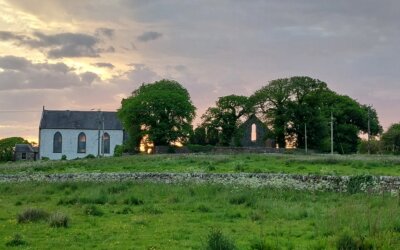
Getting lost with the soil: reflections on the Whithorn Way
The sun rises over St Ninian’s Priory and the remains of Whithorn Cathedral, on Stage 13 of the Whithorn Way. The natural environment can be truly stunning. Whilst conducting a soil sampling campaign in southern Scotland recently, I was fortunate enough to squeeze in...
France is on Fire and I am not talking about Mbappé
France is on fire Not the Mbappé at the World Cup kind. The 40°C kind. The kind where Paris hits 40°C and your apartment becomes a slow cooker. The kind where hospitals are overwhelmed, trains are suspended, and a three-day music festival gets cancelled because it is...

23rd World Congress of Soil Science 2026: Connecting Science to Policy in Nanjing
Earlier this month, the global soil science community converged on the Nanjing International Expo Centre for the 23rd World Congress of Soil Science (WCSS). Hailed as the “Olympics of Soil Science”, this marks the first time in the event’s nearly 100-year history that...
Rethink Soil Benchmarking
Soil does not have a universal benchmark Soil is often treated as if it can be compared using a single benchmark. In practice, this does not work well. Soil form under very different combinations of climate, landscape, biology and geology. What looks like a healthy or...